
Hartford Basement Flooding
We provide immediate extraction and structural drying when surface runoff or sewer lines breach residential basements. Our local crews deploy high-capacity pumps and industrial dehumidifiers to halt water damage before structural rot sets in.
Call (860) 555-0149 if water is still in the house.
Prefer to talk? (860) 555-0149
Reliable Basement Flood Recovery
Homeowners in older Hartford neighborhoods experience recurring basement flooding and municipal sewer backups during severe rainstorms.
As homeowners often describe when severe storms hit, localized storm drainage overload causes standing surface runoff to enter basements in residential neighborhoods during heavy downpours.
A pattern echoed in public discussions is that regional clay soil saturation and rising groundwater tables lead to widespread foundation seepage across residential basements after heavy rains.
When subterranean masonry walls begin to weep under hydrostatic load, property owners rely on our certified crews when dispatching emergency water damage restoration specialists to extract standing water and stabilize indoor humidity.
Our field technicians deploy industrial moisture probes and thermal imaging cameras to track hidden migration pathways behind finished framing.
We work directly alongside your insurance adjuster to document moisture logs and structural drying milestones from start to finish.
How We Resolve Basement Flooding
We follow strict industry standards to extract stagnant water, eliminate biological hazards, and dry structures to equilibrium.
- Step 1: Emergency Pumping And Power Backup. Storm-induced power outages shut down primary sump pumps, causing catastrophic basement flooding that requires urgent water extraction and structural drying.
- Step 2: Biohazard And Blackwater Extraction. Severe blackwater sewer backups through basement floor drains following heavy rainfall demand specialized biohazard extraction and contaminated material removal.
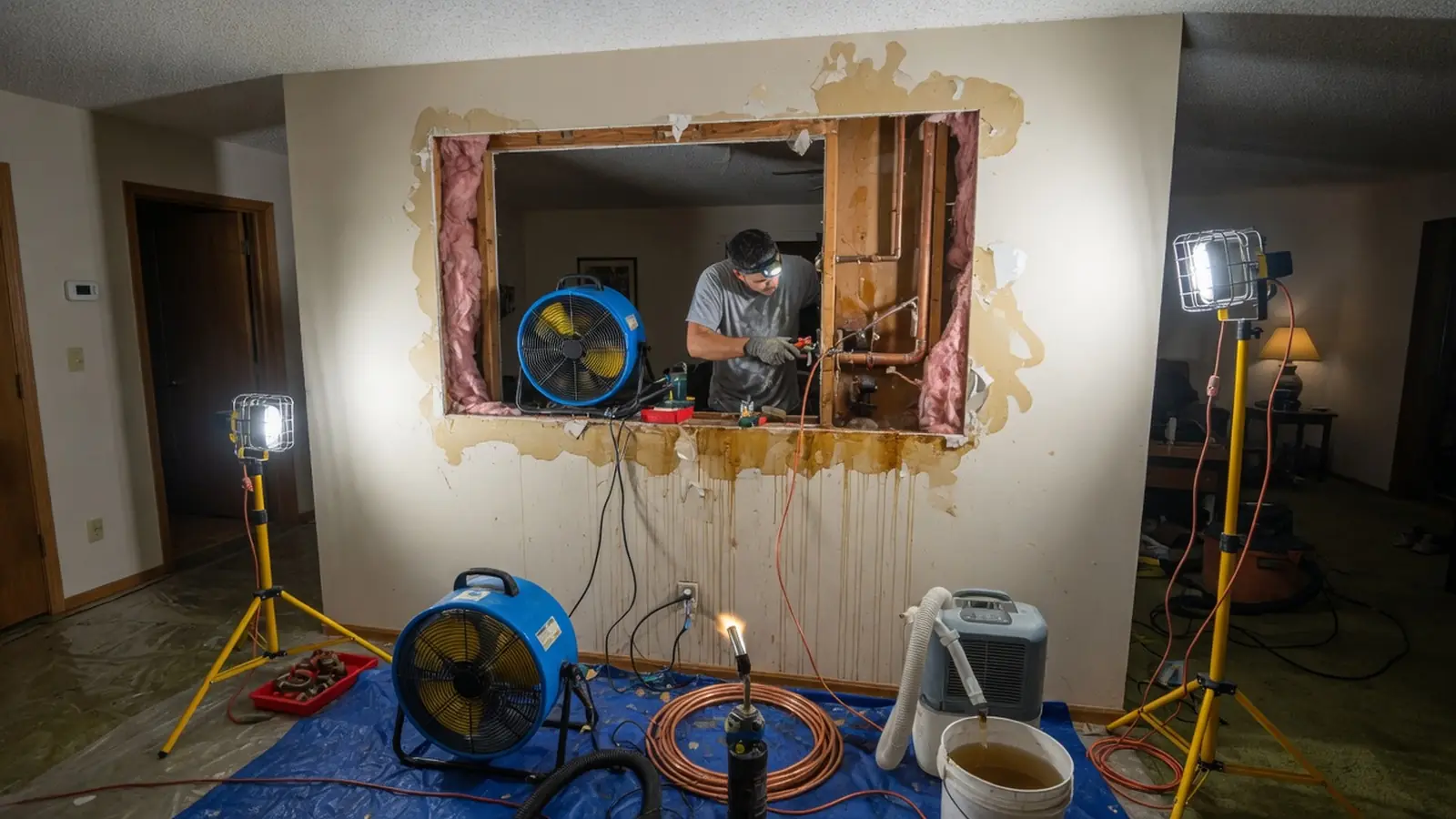
- Step 3: Drywall Removal And Moisture Mapping. Tearing out waterlogged drywall after basement flooding exposes hidden mold colonization spreading across wooden studs and base plates, which is why scheduling professional mold remediation to eliminate spores protects your indoor air quality.
- Step 4: Structural Drainage And Dehumidification. Groundwater persistently penetrates basement floor slab cracks and foundation walls during rain events, requiring interior French drains and sump basin installations alongside continuous commercial desiccant dehumidification.
Dedicated Structural Care
Sump pumps running continuously every few minutes during extended rainy periods raise serious concerns about motor burnout and sudden basement flooding. Our technicians inspect pump capacities, evaluate check valves, and mitigate indoor flooding caused by burst frozen pipes and storm surges with industrial-grade containment.
Submersible Water Extraction
We deploy high-volume trash pumps and truck-mounted extractors to rapidly remove feet of standing water from subgrade spaces. Swift pumping limits structural absorption and stops water from creeping into upper levels.
Biohazard Sanitation
When municipal lines overflow into residential basements, our certified crews apply EPA-registered antimicrobial agents. We thoroughly sanitize exposed concrete slabs, eliminate pathogens, and safely dispose of contaminated porous contents.
Structural Cavity Drying
Industrial LGR dehumidifiers and high-velocity air movers draw deeply trapped moisture out of concrete foundations and wood framing. Continuous psychrometric monitoring ensures studs and subfloors dry thoroughly to prevent secondary damage.
Our Commitment To Rapid Flood Recovery
Basement flooding threatens structural integrity and personal property within hours. Our crews follow rigorous psychrometric drying protocols, using thermal imaging and precision moisture meters to return subgrade living spaces to safe, dry conditions.
- 18Zip Codes Served
- 8Service Areas
- 3Services Offered
Read honest feedback from local property owners who trusted our crews to pump out flooded basements, salvage framing, and restore their peace of mind.
“When runoff surged into my basement, our shared driveway was completely blocked by emergency vehicles, but the crew coordinated parking with our neighbors immediately. They kept equipment noise down during late hours and contained all extracted wastewater cleanly without disturbing anyone on our street. The entire cleanup finished smoothly without a single complaint from the neighborhood association.”
Marcus V.
“Three months have passed since our cellar took on several inches of rainwater, and the space remains bone dry and odor-free. The team dried the structural framing thoroughly before giving us the all-clear, so we never had to worry about lingering dampness. Walking downstairs now feels completely reassuring even during the heaviest seasonal rainstorms.”
Elena R.
“My elderly mother lives on the first floor and uses a walker, so having extraction machinery running downstairs was initially stressful. The crew took extra time to tape down every hose securely and kept main walkways completely clear of tripping hazards. They treated our family with immense patience and checked in regularly to make sure she felt safe throughout the drying process.”
Devon K.
“Another contractor gave me a lower estimate, but they only planned to vacuum surface water and leave air blowers running for a day. This company brought deep moisture meters, removed soaked drywall baseplates properly, and identified water trapped behind the foundation framing. Paying for their thorough structural mitigation prevented catastrophic mold that the budget option would have completely missed.”
Siddharth P.
Frequently Asked Questions
How quickly should floodwater be pumped out of a flooded basement?
Pumping should begin immediately once water levels stabilize, as sitting moisture weakens framing and triggers mold within 24 to 48 hours. Rapid extraction also relieves external hydrostatic pressure against foundation walls, preventing structural cracking and catastrophic slab shifting.
What does emergency basement water extraction typically cost?
Mitigation costs generally range from $1,500 for minor standing water to upwards of $7,000 for complex structural drying and biohazard extraction. Total expenses depend on water depth, contamination class, structural materials affected, and whether insurance covers sewer backup riders.
Does homeowners insurance cover water in the basement from heavy rain?
Standard policies rarely cover external groundwater seepage, but optional flood insurance or sewer backup endorsements typically pay for cleanup. We document moisture readings, photograph waterlines, and compile itemized mitigation reports to streamline the claims process with your provider.
How long does it take to thoroughly dry a flooded basement?
Structural drying typically takes three to five days using industrial dehumidifiers, air movers, and continuous thermal moisture monitoring. Drying timelines vary based on whether porous materials like drywall and carpet padding require controlled demolition before mechanical airflow begins.
Is basement floodwater dangerous to clean up without professional equipment?
Floodwater often carries raw municipal sewage, hazardous bacteria, chemical runoff, and electrical shock risks from submerged basement outlets. Professional mitigation crews wear full personal protective equipment, follow OSHA safety standards, and use antimicrobial washes to neutralize biohazards.