
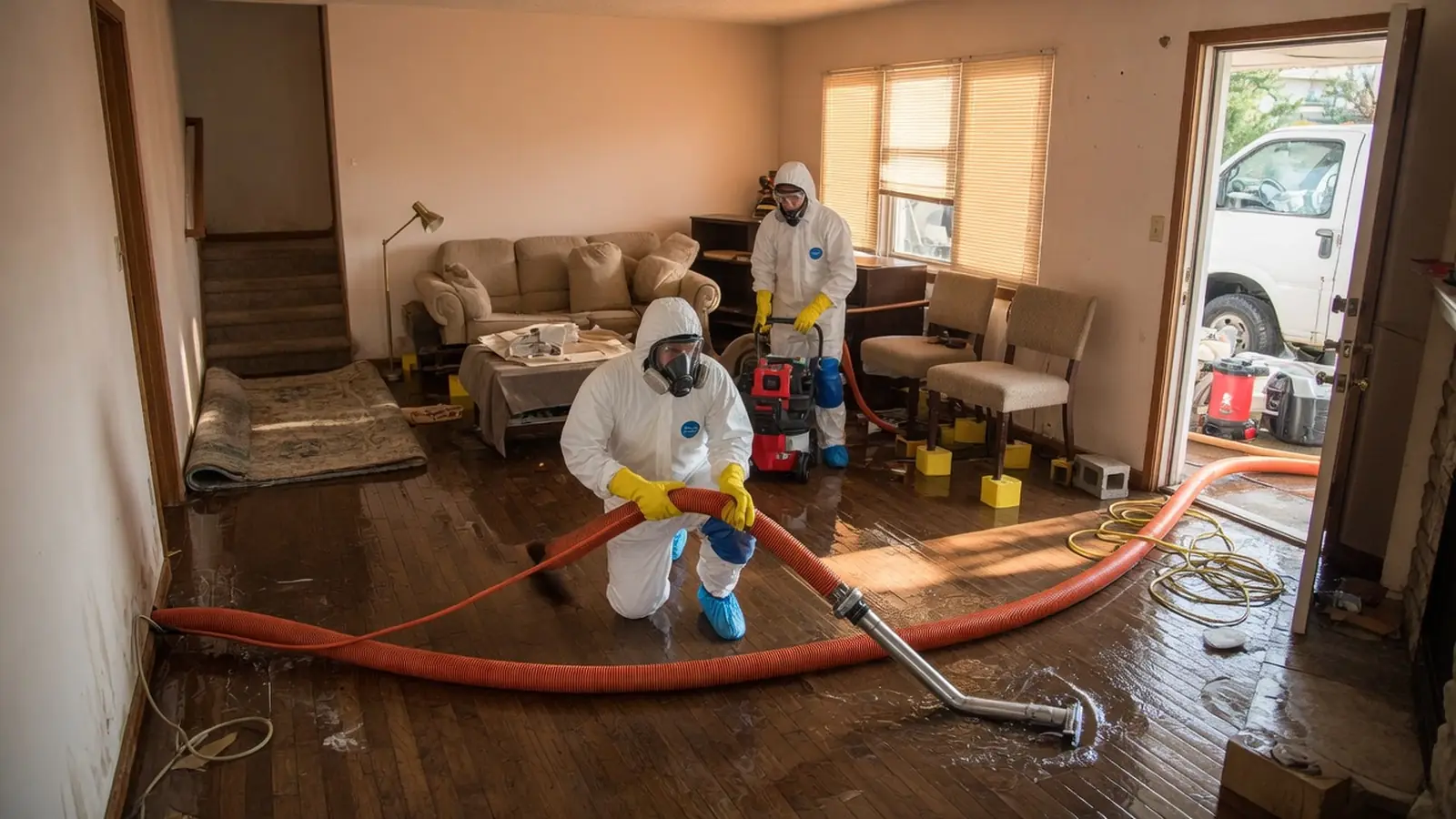
Emergency Water Damage Restoration Hartford CT
Frozen water lines thaw and rupture unexpectedly, sending pressurized water cascading through ceilings and walls and creating urgent structural mitigation needs. Our emergency crews deploy rapid extraction and structural drying to protect building foundations across historic neighborhoods. We isolate active moisture intrusion immediately to safeguard your property.
If water is pouring in, call (860) 555-0149.
Prefer to talk? (860) 555-0149
Proven Emergency Water Removal
Our emergency response crews specialize in structural drying and comprehensive water damage recovery across historic properties in Parkville and the West End.
About 60% of housing units across our municipal boundaries (33,910 of 56,174) were built before 1960, the era of galvanized steel supply lines and cast iron drains.
Trade video analyses demonstrate that homes built between 1940 and 1970 frequently harbor hidden cast-iron drain line rot and brittle polybutylene pipes that rupture without warning.
About 14% of housing units in the local market (7,703 of 56,174) were built in the 1960s, overlapping the years aluminium branch wiring was installed.
About 16% of housing units in the area (8,947 of 56,174) were built in the 1970s and 1980s, overlapping the years polybutylene supply piping was commonly installed.
About 90% of housing units throughout our service territory (50,560 of 56,174) were built before 1980, the period when asbestos-containing materials and lead paint were still in use.
As homeowners often describe in regional community discussions, groundwater persistently penetrates basement floor slab cracks and foundation walls during rain events, requiring interior French drains and sump basin installations.
Review our proven emergency response for burst and frozen pipes before secondary structural rot begins taking hold inside your walls.
Every mitigation job includes precision moisture mapping with calibrated penetrating meters and infrared thermography to guarantee no damp pockets remain hidden behind baseboards.
How We Mitigate Water Infiltration
Our technicians execute an aggressive four-stage mitigation protocol to stop active flooding, extract moisture, and protect building framing.
As homeowners often describe in public disaster recovery threads, frozen water lines thaw and rupture unexpectedly, sending pressurized water cascading through ceilings and walls and creating urgent structural mitigation needs.
We deploy immediate containment and industrial extraction systems, and you can explore comprehensive cleanup solutions for severe basement flooding to see how our crew prevents structural settling.
- Immediate Extraction & Source Control. Pre-1950s balloon framing lacks horizontal fire blocking, allowing attic pipe bursts to travel down open wall cavities into basements within seconds. We deploy high-volume extraction units immediately to pump out standing water and isolate active plumbing breaches before moisture spreads deeper into wall cavities.
- Infrared Moisture Mapping. Technicians scan all affected wall assemblies, sill plates, and subfloors with calibrated infrared cameras and non-invasive moisture meters. This thermal mapping pinpoints hidden moisture pockets trapped behind plaster and insulation so no damp materials escape the drying plan.
- Class 4 Psychrometric Drying. Effective structural drying requires dropping indoor relative humidity below 50% to create a vapor pressure differential that extracts deep moisture from wood framing. We position commercial desiccant dehumidifiers and high-velocity air movers to maintain continuous evaporation until structural framing reaches baseline dry standards.
- Microbial Sanitation & Final Verification. Unlike modern drywall, historic plaster on wooden lath stubbornly traps moisture, requiring specialized Class 4 psychrometric drying to prevent rot. We apply botanical antimicrobial treatments to dried structural surfaces and deliver complete digital moisture logs confirming structural stability.
Certified Structural Drying Commitment
We follow strict IICRC standards on every mitigation project, deploying commercial-grade desiccant equipment, calibrated hygrometers, and thermal imaging cameras to guarantee measurable drying. Our technicians never pack up until wood framing moisture content matches natural equilibrium levels, protecting your home against hidden fungal growth and dry rot.
Emergency Burst Pipe Extraction
Rapid containment and water removal when indoor supply lines rupture under sudden freezing or pipe decay. Our technicians deploy truck-mounted pumps to extract standing water and set up immediate cavity drying.
Winter Ice Dam Leak Response
Winter freeze-thaw cycles generate roof ice dams that push meltwater under shingles and funnel active leaks straight down into attics and wall cavities. We remove soaked insulation, dry roof rafters, and stabilize interior ceilings before structural collapse occurs.
Storm & Hail Water Mitigation
The heaviest recent hail year around our regional territory was 2023, with 95 radar hail signatures inside a 15-mile radius. In total, NOAA radar recorded 327 hail signatures within about 15 miles of the metropolitan center between 2021-2025 (2021: 72, 2022: 70, 2023: 95, 2024: 70, 2025: 20). Our teams secure exterior breaches and extract roof leak water immediately.
Dedicated Rapid Restoration Protocols
Our restoration team responds immediately to mitigate residential water intrusions using industrial psychrometric drying equipment and moisture mapping to prevent permanent structural deterioration.
- 20Zip Codes Served
- 8Service Areas
- 3Services Offered
Homeowners share their first-hand experiences following emergency extraction and comprehensive structural drying services performed by our certified technicians.
“Six months after a burst upstairs pipe flooded through our subflooring, there is zero mold smell or baseboard warping. The crew dried the framing thoroughly before replacing the drywall, and the moisture readings remain completely normal. Having that permanent peace of mind after such a destructive leak makes all the difference.”
Marcus T.
“When pressurized water escaped into our shared condo corridor late on a Sunday, our association president was immediately stressed about hallway damage. The team parked their extraction trailer discreetly, ran low-noise containment hoses, and kept the building manager updated throughout the afternoon. Their professionalism prevented any neighborhood friction while resolving the active flooding.”
Brenda K.
“My eighty-year-old mother lives with us and relies on a walker, so having noisy air movers and tangled cables everywhere was my biggest worry during the mitigation. The technicians taped every power cord flush against the wall and positioned the dehumidification units away from her walking paths. They treated her space with tremendous courtesy during an otherwise chaotic three days.”
Devon S.
“Another contractor gave us a cheap estimate that only accounted for surface carpet extraction while leaving wet plaster on lath behind our kitchen walls. This company showed us the moisture meter readings proving the wall cavities were fully saturated, then dried everything with Class 4 equipment. Going with them saved our structural framing from hidden rot.”
Alina R.
Frequently Asked Questions
Can I use an open flame torch or high-heat gun to thaw a frozen copper pipe inside a finished wall?
Never use an open flame torch or high-heat gun inside a wall cavity because trapped combustible materials ignite rapidly behind historic framing. Technicians utilize controlled Class 4 warm-air induction systems and thermal imaging cameras to gently warm frozen copper lines without risking structural combustion.
What causes indoor frozen pipes to burst and flood suddenly during winter?
Pipes burst during thaws because expanding ice plugs trap extreme hydraulic pressure between the blockage and closed plumbing fixtures. Volumetric expansion produces severe internal pressure spikes that split pipe walls, sending pressurized water cascading into finished rooms once temperatures rise.
How does water extraction differ between historic plaster walls and drywall?
Unlike modern drywall, historic plaster on wooden lath stubbornly traps moisture, requiring specialized Class 4 psychrometric drying to prevent rot. Plaster assemblies retain water behind dense keys that hold the lath together, requiring continuous low-grain refrigerant dehumidification and directed airflow rather than premature demolition.
Why is relative humidity monitored so strictly during structural drying?
Technicians drop indoor relative humidity below 50% to create a vapor pressure differential that extracts deep moisture from internal wood framing. Without maintaining this critical vapor pressure gradient, moisture stays bound inside sill plates and subfloors, increasing long-term structural decay risks.
How do winter freeze-thaw cycles cause severe ceiling and attic leaks?
Winter freeze-thaw cycles create roof ice dams that push meltwater beneath shingles, funneling active leaks directly into attics and wall cavities. When snow melts over warm upper roof sections and refreezes at eaves, backing water penetrates under roof decking and requires thermal imaging inspections and immediate extraction.